4th Mar 2026
Selecting the right blast machine is one of the most important decisions in any surface preparation project, as it directly affects productivity, surface quality, and compliance.
Not all blast machines will suit every application. Contractors must consider surface type, project scale, access constraints, and environmental factors such as dust control and noise restrictions.
This blog explains how to approach blast equipment selection logically, ensuring you choose a machine that delivers the required finish while remaining efficient, compliant, and practical on site.
Start with the surface and material
The first step when choosing a blast machine is understanding the surface you are working on and the level of preparation required. Equipment should always be selected based on the application requirements, not simply on what is available on site.
Key considerations include:
- Base material – steel, stainless steel, aluminium, concrete, or composite substrates.
- Surface condition – mill scale, corrosion, old coatings, or light contamination.
- Required finish – roughened profile, cosmetic clean, or precision preparation.
Heavy corrosion removal on structural steel demands very different equipment compared to cleaning welds, flanges, or sensitive components. Selecting a blast machine that matches the aggressiveness required helps avoid over-blasting, wasted abrasive, excessive dust generation, and unnecessary rework.
Need help matching surface condition and preparation requirements to the right type of equipment? Our team can help assess your application before work begins.
Match the machine to project scale
Project size plays a major role in selecting the most appropriate blasting equipment. Using equipment that is too small can slow progress and increase operator fatigue, while oversized machines may be inefficient, harder to control, and impractical for confined sites.
Large-scale projects
In fixed facilities and production environments, higher-capacity blast machines are typically required and are specifically designed for large-scale, high-throughput industrial work. These systems excel where automation, consistency, and continuous operation are critical, making them well suited to factory-based processes, rather than on-site blasting operations.
They support:
- Continuous blasting over long durations.
- High-throughput, automated operation.
- Consistent surface preparation across large volumes of work.
- Reduced downtime between abrasive refills.
Because these machines are infrastructure-level installations rather than portable equipment, blast machine capacity and abrasive throughput play a key role in determining efficiency and labour costs on extended projects. Selecting equipment proportionate to the scale and production demands of the work is essential for maintaining efficiency and cost control.
Working in a fixed facility or production environment? We can advise on blast machine options suited to high-throughput, automated operations.
Smaller or localised tasks
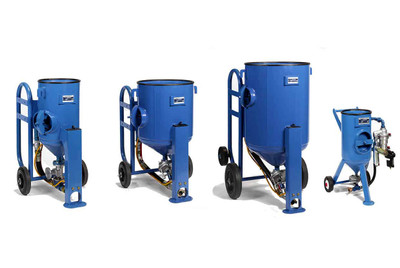
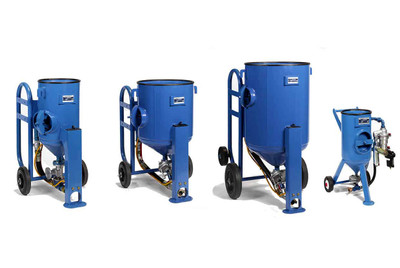
For spot repairs or detailed work, portable blasting equipment is often the most practical option. These machines are designed for on-site use, where flexibility, access, and control are more important than maximum throughput.
Portable systems allow:
- Greater control over the blast area, ideal for precision work.
- Reduced abrasive consumption, helping limit waste and clean-up.
- Improved consistency in restricted or confined spaces.
- Ease of movement between work areas, particularly on active sites.
Because these machines are compact and easily manoeuvrable, they are well suited to maintenance work, touch-ups, and tasks where only a specific area requires preparation. Matching the machine size and capability to the scope of work improves finish quality while avoiding unnecessary operating costs.
For on-site or maintenance work, we can also help identify portable systems that balance control, efficiency, and ease of use.
Environmental constraints: Dust, access, and containment
Environmental conditions often influence which blast machine is appropriate, particularly in regulated, urban, or live operational environments.
Dust control requirements
Where dust generation must be minimised, alternatives may be required. Lower-dust and more environmentally considerate options can include:
- Low-dust or recyclable abrasives, which help reduce airborne fines and waste volumes.
- Dust-suppressed or dustless blasting methods, designed to limit particle release at the point of impact.
- Wet blasting techniques, where water suppression is suitable and runoff can be managed safely.
- Effective dust extraction and filtration systems, which capture airborne dust and support cleaner, safer working environments.
While these approaches can significantly reduce airborne dust and improve environmental control, they may introduce trade-offs around speed, surface profile control, or post-blast drying requirements. Selecting the right combination depends on the surface specification, site constraints, and compliance obligations.
If dust control, containment, or site restrictions are a concern, blasting methods and supporting equipment should be assessed as part of a complete system – and we can help you evaluate approaches that support compliance without compromising results.
Access limitations
Confined spaces, awkward geometries, and restricted access areas require equipment that is easy to manoeuvre and adaptable. Compact blast pot setups can help maintain productivity without compromising safety or surface quality.
Precision vs productivity
Not all blasting work prioritises maximum speed. In many applications, control and accuracy are more important than output.
- High-productivity blasting focuses on cleaning large areas quickly and efficiently. This is achieved by using appropriately sized equipment, efficient abrasives, and consistent techniques to maximise output, reduce abrasive use, and lower overall costs.
- Precision blasting is about control rather than speed. It uses carefully selected abrasives and controlled blasting parameters to achieve a specific surface finish, making it ideal for detailed work or applications where coating performance and surface integrity are critical.
Effective blasting operations strike a balance between productivity and control, ensuring speed does not compromise surface integrity or coating performance. Selecting a blast machine that matches the level of precision required helps prevent damage to surrounding areas and reduces the risk of premature coating failure.
Abrasive compatibility and air supply
Blast performance depends on the entire system working in balance – from abrasive choice and air supply through to the type of blasting equipment used for the application.
Important factors include:
- Abrasive size, density, and flow characteristics.
- Required working pressure at the nozzle.
- Compressor capacity and air quality.
- The intended surface outcome – profile development or shot peening.
For example, shot-blasting machines used for shot peening are designed to improve surface fatigue resistance and component life, not to generate an anchor profile for coating. Selecting the correct equipment for the intended process is critical to achieving the required surface condition.
Where automated abrasive blasting is required for profile development before coating, robotic blast rooms offer a highly consistent solution. These systems are particularly well suited to repeated components such as rolling stock chassis, delivering controlled, repeatable surface preparation with reduced operator variability.
Inconsistent abrasive flow, insufficient air volume, or pressure losses within the system can still lead to uneven finishes, excessive wear on components, and reduced efficiency. Matching equipment, abrasive media, and air supply to the application remains essential for reliable, high-quality results.
Unsure whether your current abrasive, air supply, and equipment selection are suited to your blasting process? We can help review system compatibility to improve consistency, efficiency, and surface quality.
Compliance, safety, and operator control
Modern blasting operations must meet strict health, safety, and environmental standards. The right blast machine supports compliance by:
- Allowing better control over dust and abrasive rebound.
- Reducing operator exposure.
- Supporting safer working practices in confined or sensitive environments.
Ease of maintenance, reliability, and availability of spares should also be considered, particularly for long-term or repeat work. Equipment that is difficult to maintain or unsuitable for site conditions can quickly undermine productivity and compliance.
Making the right choice
Choosing a blast machine should never be a one-size-fits-all decision. By evaluating surface type, project scale, environmental constraints, system compatibility, and precision requirements, contractors can select equipment that delivers the best balance of performance, compliance, and finish quality.
At Airblast Eurospray, we support contractors with practical, application-led guidance on blast equipment selection, helping ensure each project uses the most appropriate solution for the task at hand. If you’d like application-led advice on selecting the right blast machine for your project, the Airblast Eurospray team is available to discuss your requirements.